
So you want a custom build. Not a bolt-on café racer kit, not a factory “special edition” with a different seat and some blacked-out bits. Something genuinely yours, built from scratch to your vision. It’s one of the most rewarding things you can do as a rider. It’s also a serious commitment of time, money, and energy. The builders who do this well will tell you the same thing: the more prepared you are walking in, the better the bike coming out.
Here’s what you need to know before you make the call.
Start With Your Inspiration
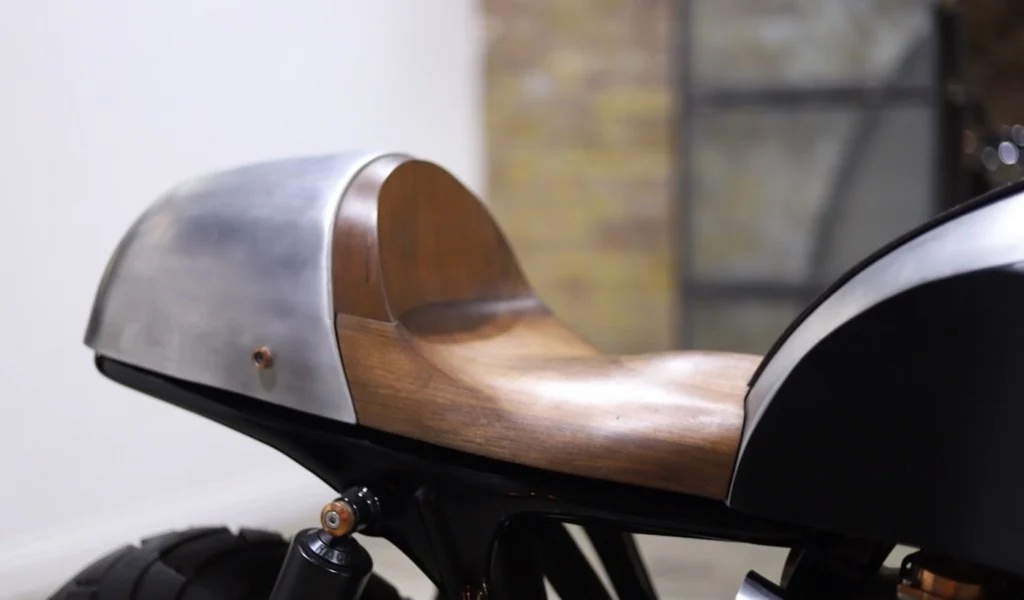
Before you speak to a single builder, do your homework visually. Spend time on Instagram, Pinterest, and build galleries pulling together images of bikes you love, or even just details that stop you scrolling. It doesn’t have to be a coherent vision yet. A seat profile that appeals, an exhaust line that catches your eye, a paint effect from a completely different era. All of it is useful raw material.
Don’t limit yourself to motorcycles either. A colour from a vintage car, a texture from an architecture project, a finish you spotted on a piece of furniture. Good builders are surprisingly fluent at translating abstract inspiration into metal and paint. What you’re really trying to give them is a feel for your aesthetic instincts, not a finished brief.
Know Your Style (Even Roughly)
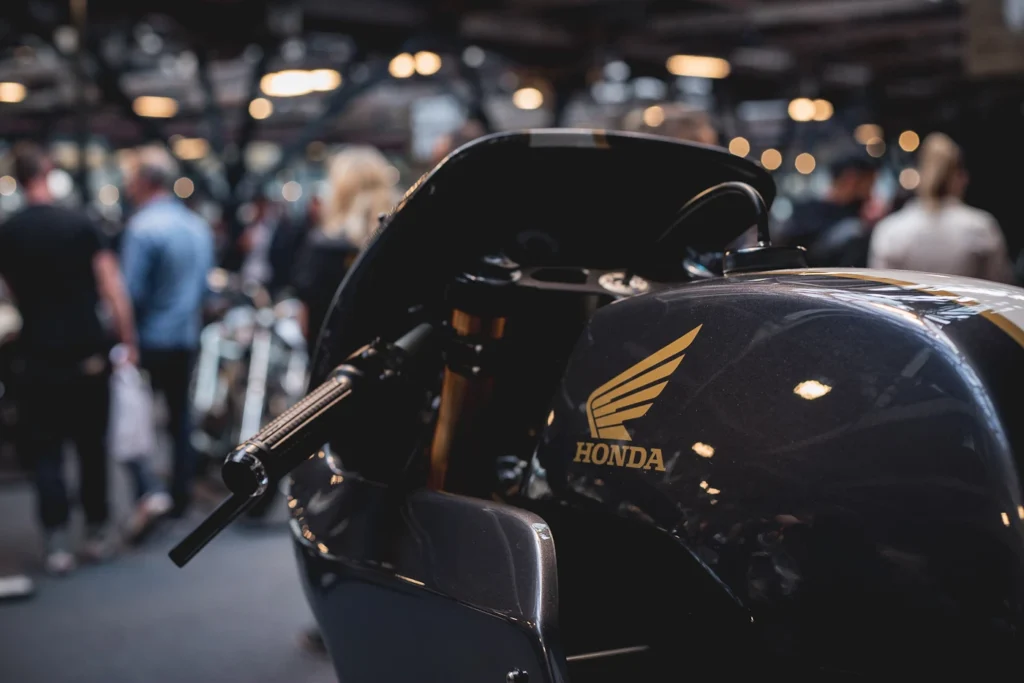
Custom builds tend to fall into recognisable categories, and knowing which direction you’re leaning helps narrow down both your builder search and the conversations you’ll have with them. The main ones worth knowing:
- Café Racer. Low, lean, clip-on bars. Built for the feeling of speed.
- Scrambler. Upright, versatile, high exhausts. Ready for light off-road.
- Flat Tracker / Dirt Tracker. Stripped back, aggressive, track-inspired.
- Brat / Street Tracker. Relaxed, low-slung, built for the city.
- Bobber. Stripped to essentials, chopped rear, classic American roots.
- Chopper. Long, low, unapologetically theatrical. Extended forks, custom frame, built to be seen.
- Streetfighter. Naked aggression. Superbike mechanicals without the fairing, all attitude.
You don’t need to pick one and fully commit before your first conversation. But knowing roughly where you sit helps a builder understand whether you’re imagining a weekend showpiece or something you’ll actually ride every day.
Choosing Your Donor Bike
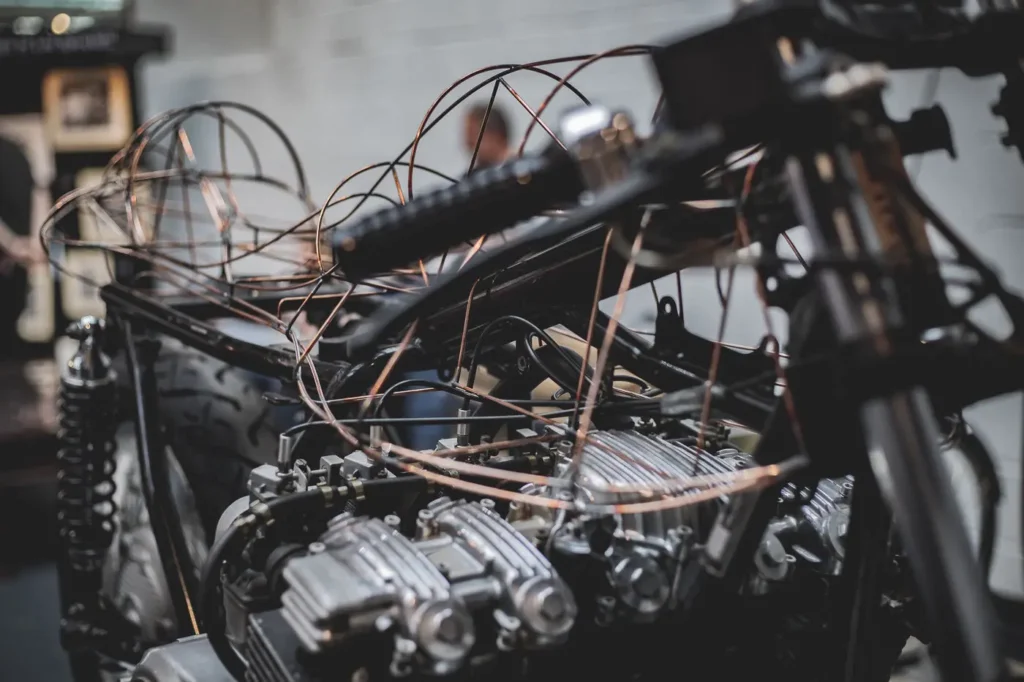
The donor bike is the foundation everything else is built on, and it’s a decision worth taking seriously. You’ve broadly got two routes: bring your own, or work with your builder to source one.
If you’re bringing your own, condition and service history matter more than most people expect. A bike that “just needs a bit of work” can quietly double your budget once a builder gets into it and finds years of neglect underneath. Sometimes the smarter move is spending more upfront on a solid, well-maintained donor than starting cheap and facing a cascade of restoration costs before the interesting work even begins.
Starting fresh with a brand new bike is also a legitimate option and increasingly popular. You get mechanical peace of mind, and there’s something genuinely satisfying about taking something straight off the showroom floor and making it completely your own.
When weighing up a donor, think about engine reliability, parts availability, how well the frame lends itself to the style you’re after, and what aftermarket support exists for that platform.
Finding the Right Builder
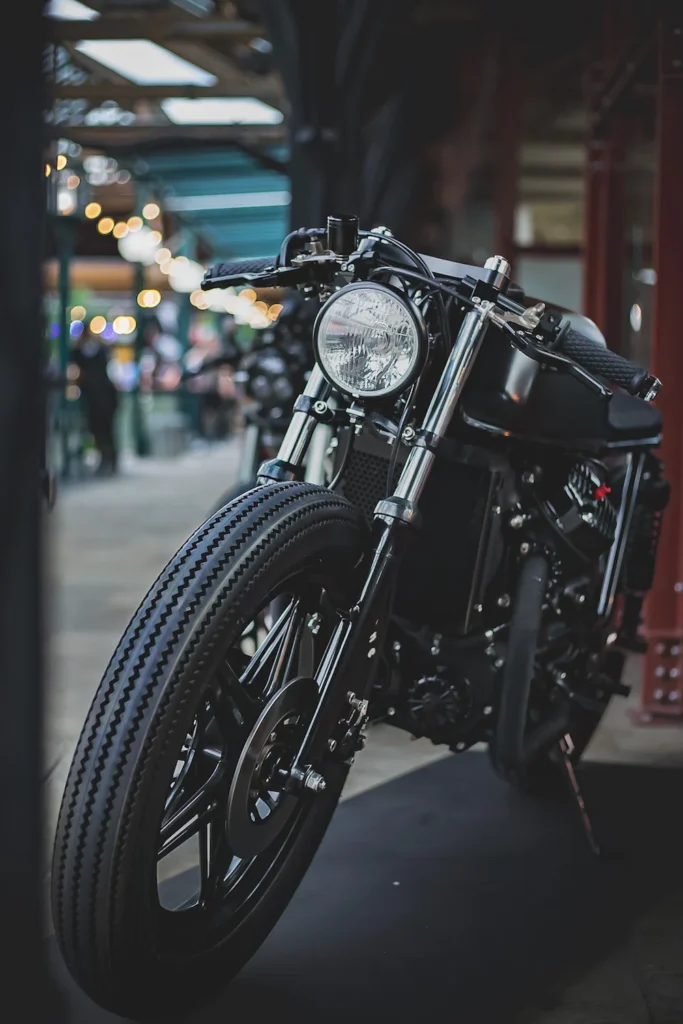
Not all custom builders are the same, and the best one for your project isn’t necessarily the most well-known or the most expensive. What matters is finding someone whose portfolio genuinely aligns with what you’re imagining. A builder who lives and breathes clean, minimalist café racers may not be the right fit for a heavily fabricated chopper, and vice versa.
Before you commit, it’s worth looking at a few things:
Portfolio depth. Have they actually built bikes like what you’re imagining?
Fabrication capability. Do they do metalwork in-house, or are they assembling from bought-in parts?
Communication style. Do they keep clients updated with photos and progress as the build moves forward?
Waiting lists. Good builders are usually booked out. Factor that into your timeline realistically.
Background and speciality. Some shops come from an engineering or aviation background, others from fine art or industrial design. That shapes everything about how they approach a build.
Ask about the consultation process before putting any money down. A builder worth working with will want a proper conversation, in person, on a call, or virtually, before either of you commits to anything.
Briefing Your Builder Properly
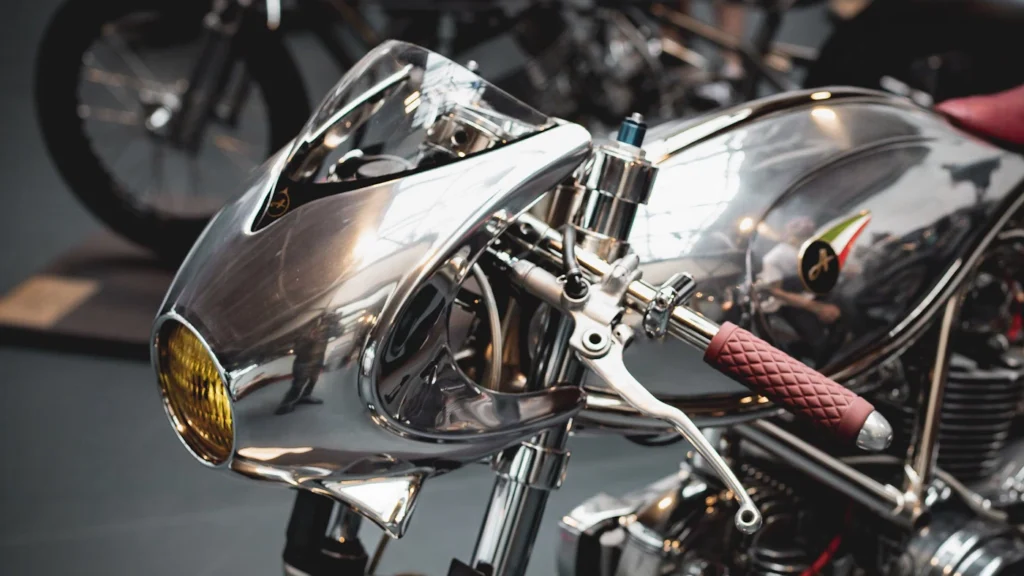
The initial consultation is where your build really starts. Come prepared. Bring your inspiration images, be clear about how you intend to use the bike, and be honest about your budget ceiling. The more specific you can be, the better.
A thorough builder will walk you through decisions across every part of the motorcycle. Expect to develop opinions, or at least preferences, on:
Bodywork. Seat style and material, fuel tank (stock, modified, or entirely new), side panels, fairings, and your paint scheme, including colours, finishes, and any graphics or effects.
Frame and mechanicals. Whether the engine stays stock or gets work done to it, exhaust routing and style, frame modifications, suspension setup front and rear, and brake configuration.
Wheels and tyres. Spoke vs cast, sizing, colour, and tyre profile suited to how you’ll actually ride it.
Controls and electrics. Handlebar style, instrumentation, switchgear, lighting setup, and any integrated extras like phone charging.
You won’t have answers to all of this upfront. That’s exactly what the back-and-forth process is for. But the more ground you’ve covered mentally before that first meeting, the more productive the whole thing becomes.
Setting a Realistic Budget
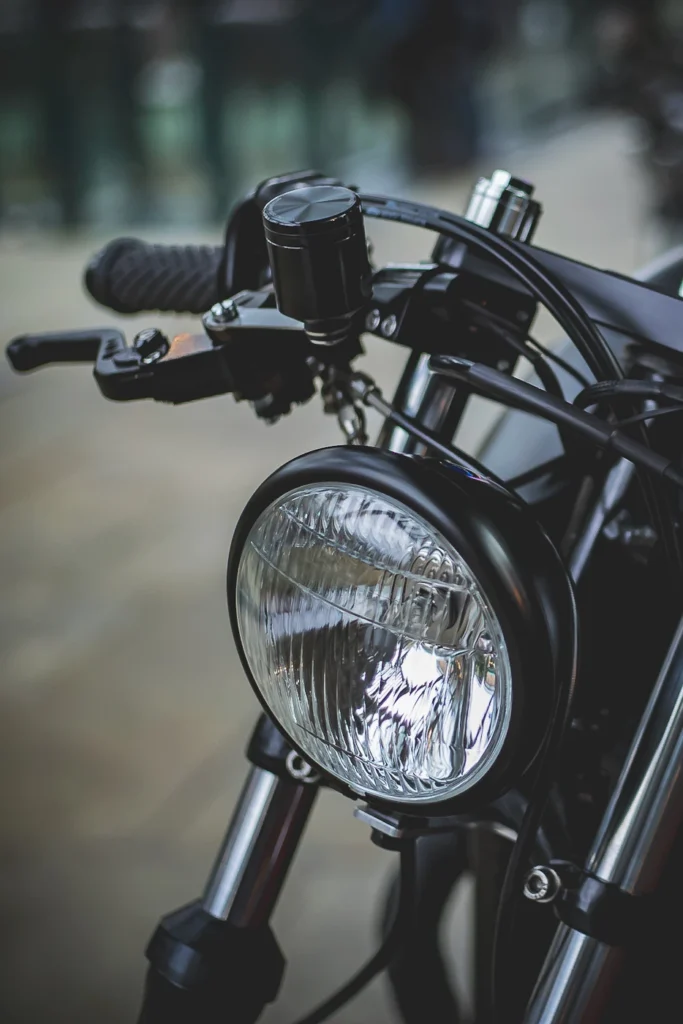
Custom builds are expensive. That’s not a warning, it’s just the reality of commissioning skilled craftspeople to produce a one-off machine with bespoke parts. A budget that feels generous at the outset can get absorbed quickly once you factor in fabrication hours, quality components, paint, and finishing.
A few things that tend to move the needle most:
Stock vs custom components. Keeping the engine standard and running original switchgear costs a fraction of going bespoke throughout.
Paint and finish. A complex multi-stage job with custom graphics is a serious line item.
Fabrication from scratch. Building a new subframe, custom exhaust, or one-off bodywork takes real time. And time is what you’re paying for.
Donor bike condition. Hidden restoration costs on a rough starting point can eat your budget before the interesting work even begins.
Be straight with your builder about your ceiling. A good one will help you prioritise, working out where spending makes the most visual and mechanical impact, and where stock or off-the-shelf parts will do the job just as well.
What Happens During the Build
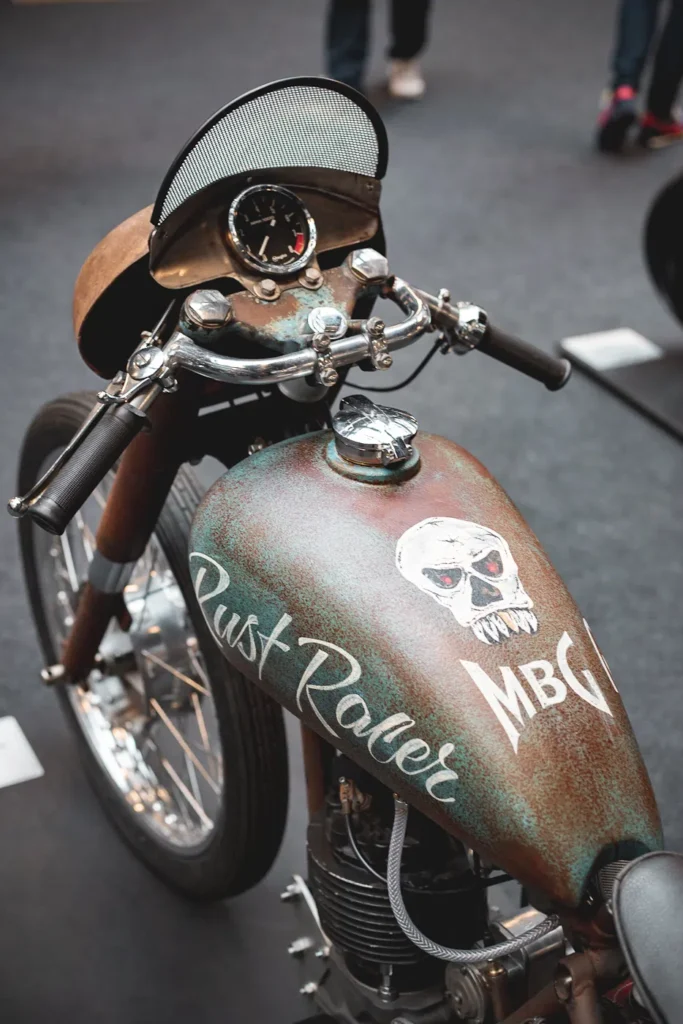
Once the brief is locked and a deposit is down, the build proper begins. Expect a timeline of several months minimum for a serious project, longer for heavily fabricated or complex builds, and longer again if your builder runs a waiting list. Most of the good ones do.
Stay engaged throughout. The best builder-client relationships involve regular progress updates and photos, with the client available to weigh in on key decisions as they come up. Your input at the right moments, on a paint mock-up, a seat profile, an exhaust routing choice, is what keeps the build true to your original vision rather than gradually drifting into someone else’s interpretation of it.
At the end of it, you ride away on something nobody else has. That’s the whole point.